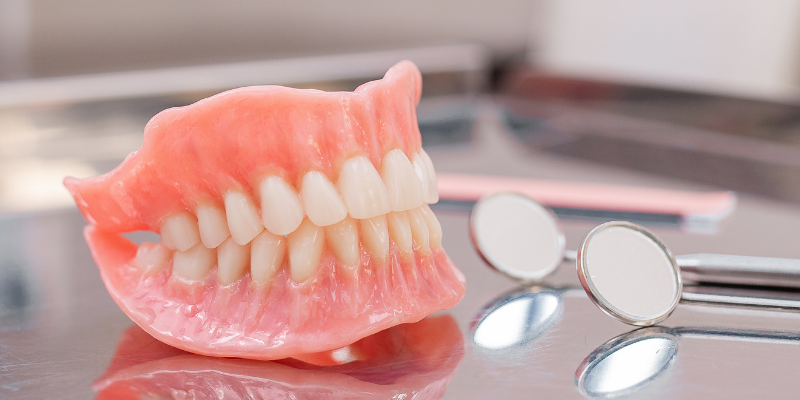
How do dentures stay in place?


Well-fitting dentures create a suction effect between the base of the denture and the gum tissue, and the muscles around your mouth naturally adapt to help hold them in position. For partial dentures, clasps — metal or tooth-coloured — can attach to your remaining teeth for added stability.
Where gums have become flat after prolonged tooth loss and suction is less effective, we may recommend implant-retained dentures to give you the confidence to eat and smile without worry.
How do dentures work?
Dentures are removable replacements for missing teeth, designed to look and function like your natural teeth and the surrounding gum tissue. At Conway House, we take pride in making dentures that are realistic, natural-looking, and comfortable to wear.
How long do dentures last?
With good care, a denture typically remains in good condition for around seven years — though many of our patients are happy with theirs for considerably longer. The acrylic teeth, while very lifelike, do wear over time.
Regular check-up appointments allow us to assess the fit and condition of your denture and make adjustments to help you get the most from it.
How many appointments does it take to make a denture?
A denture typically takes between four and eight appointments, spaced one to two weeks apart. Each stage is important — moulds, bite records, try-ins, and fit checks — and cannot be rushed if you want a result that is comfortable and well-fitting. Your dentist and our dental technicians work closely together throughout the process, and you will have the opportunity to approve the appearance of your teeth before the final denture is processed.
I am worried about coping with moulds being taken. What can be done?
We have plenty of tips to help you manage impressions comfortably, and we ensure they are in your mouth for the minimum time necessary. Where possible, we use our intraoral scanner instead — a digital device that takes a series of photographs to build a 3D model of your mouth, removing the need for traditional impression material altogether.
I have a loose tooth that needs to come out urgently. Can you help?
Yes. We can make an immediate denture in advance of the extraction so that the tooth is removed and the denture fitted at the same appointment. You will not need to go a single day without a tooth. Do bear in mind that as the gum and bone heal over the following months the fit may loosen, and the denture may need adjustment or replacement after this period — but this is a normal and manageable part of the process.
Will I adapt to my new denture straight away?
A well-fitting denture makes adaptation much easier, but it is normal for a new denture to feel unfamiliar at first. Talking and eating may take some getting used to. Starting with softer foods and reading aloud can help speed up the process. Most patients feel comfortable within days to a few weeks, though occasionally it takes a little longer. We are always available for adjustments if something is not right.
How do I look after my denture?
Clean your denture daily with a soft brush and soap — not toothpaste, which scratches the surface. Continue to brush your remaining natural teeth and clean between them as usual, as anything introduced into the mouth can increase the risk of gum disease or decay around your remaining teeth. You can soak your denture in a cleaning solution (Dentural for acrylic, Steradent for metal) once or twice a week for up to 15 minutes — always rinse thoroughly before putting it back in. Ideally, remove your denture at night to allow your gums to rest.
Can I leave my denture in Steradent overnight?
No — avoid leaving dentures in Steradent overnight. It is intended for short-term soaking (around 15 minutes, once or twice a week) to remove plaque and stains. Prolonged soaking can damage certain denture materials. If you prefer to keep your denture out overnight, store it in plain water instead.
How much do dentures cost?
The cost depends on the material and design chosen. At Conway House, an acrylic denture starts from £450 and a metal (cobalt-chrome) denture from £625. Implant-retained denture costs depend on the number of implants required and will be quoted clearly at your consultation. Flexible payment options are available, including 0% finance subject to status.
Are dentures or dental implants better?
Neither is universally better — each has genuine advantages and the right choice depends on your clinical situation, your expectations, and your budget. Implants are fixed, preserve bone, and feel closest to natural teeth, but they require surgery and a greater investment.
Dentures are removable, non-surgical, and immediately accessible. For patients who want the stability of implants with the flexibility of a removable appliance, implant-retained dentures offer a middle ground. Your dentist will explain all the options at your consultation.