Contact Us

Protecting your teeth from decay — and restoring them when it strikes — with expert care at every stage.

Dental decay is the most common reason people seek dental treatment, yet it remains one of the most preventable conditions in oral health. At Conway House Dental Practice, we take a proactive approach: identifying decay as early as possible, treating it conservatively, and — where it has progressed — drawing on our in-house team of specialists to restore your tooth and protect your long-term oral health.

We welcome patients from Marlow, Beaconsfield and High Wycombe who are looking for clear, honest advice and a dental team equipped to manage everything from a straightforward filling through to complex restorative and specialist care — all under one roof, without the need for external referrals.

What Is Dental Decay?

Dental decay — also known as tooth decay or dental caries — occurs when bacteria in the mouth produce acids that gradually erode the hard outer layer of a tooth (the enamel). These bacteria feed on sugars from food and drink, releasing acids that weaken and dissolve enamel over time.

If left untreated, decay progresses inward through the enamel into the softer dentine beneath, and eventually into the pulp — the innermost part of the tooth containing the nerve and blood supply. At this stage the tooth can become acutely painful and infected, requiring more complex treatment to save it, or extraction if it cannot be preserved.

Decay can affect anyone at any age. Children, teenagers and adults all face risk — though the causes, patterns and treatment approaches differ, which is why our clinical team includes specialists in paediatric dentistry, endodontics and restorative dentistry alongside our general dental team.

Book a Dental Health Assessment at Conway House

Whether you have a specific concern, have not been seen for some time, or are simply looking for a dental team you can trust in Marlow, Beaconsfield or High Wycombe, we are here to help.

Book your dental health assessment today. Our team will identify any concerns early, explain your options clearly, and create a treatment plan built around your health, your priorities, and your budget.

Back to Specialist Dentistry Online Booking
down blue white circle arrow down white blue circle arrow

Contact

Get in touch

TREATMENT

What Causes Dental Decay?

Decay results from a combination of factors that create the right conditions for acid damage:

  • A diet high in sugar and acid — every sugar exposure triggers an acid attack lasting up to 40 minutes. Frequency matters as much as quantity.
  • Poor oral hygiene — inadequate brushing and flossing allows plaque to accumulate on tooth surfaces, releasing acid continuously.
  • Dry mouth — saliva neutralises acid and is a natural defence against decay. Medications, medical conditions and mouth breathing can all reduce saliva flow significantly.
  • Gum recession — when gums recede, the softer root surfaces are exposed. Root caries can develop rapidly in these areas.
  • Age and developmental factors — children are vulnerable as enamel is still forming; older adults face increased risk from recession, reduced saliva, and ageing restorations.

Secondary decay — older fillings or crowns with worn margins can allow bacteria to re-enter the tooth underneath.

Online Booking
Conway House Dental

TREATMENT

Preventing Decay: What You Can Do

The most effective treatment for dental decay is preventing it from occurring in the first place. Our team will always provide personalised preventive advice as part of your care, but the fundamentals are:

  • Brush twice a day with a fluoride toothpaste, using a systematic technique to reach all tooth surfaces including the gumline.
  • Clean between your teeth daily with floss or interdental brushes — cavities between teeth are among the most common and entirely preventable.
  • Use fluoride mouthwash at a different time to brushing to provide an additional protective fluoride dose.
  • Reduce the frequency of sugar and acidic food and drink — concentrated mealtimes rather than constant snacking dramatically reduces acid exposure.
  • Attend regular dental check-ups — the interval appropriate for you will be recommended based on your individual risk level and history.

If you have not been seen for some time, or if you have a specific concern, a comprehensive dental health assessment is the right place to start. We will check thoroughly for decay, assess your gum health, and give you an honest picture of what, if anything, needs attention.

Online Booking
Conway House Dental

TREATMENT

For children, dentists often apply fluoride varnish during check-ups to help prevent tooth decay and keep their smiles healthy. Regular dental visits and a balanced diet also play a key role in keeping your teeth strong and cavity-free

If you’re concerned about dental decay, contact our reception team at 01494 526 578 to book a comprehensive health assessment or email us at [email protected].

Online Booking
Conway House Dental

Signs and Symptoms to Look Out For

One of the challenges of dental decay is that it is often painless in its early stages. By the time discomfort begins, the decay may already be well established — another reason why regular check-ups are so valuable. As decay develops, you may notice:

  • Tooth sensitivity — a sharp or lingering response to hot, cold, or sweet foods and drinks.
  • Toothache — a dull ache or sharp pain, spontaneous or triggered by biting.
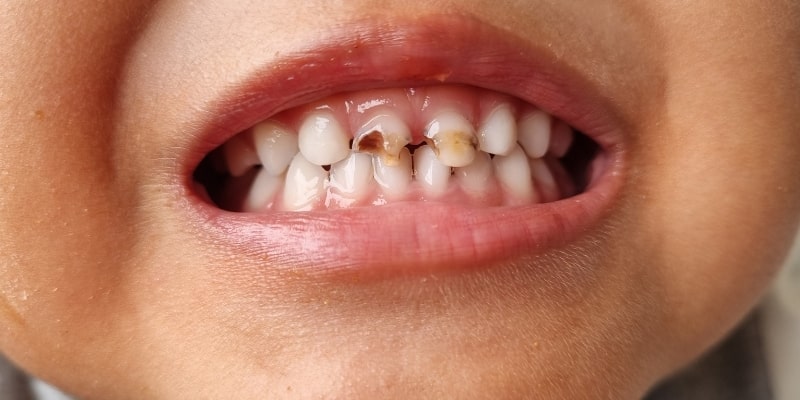
  • Visible holes or dark spots — discolouration or cavities visible on the tooth surface.
  • Pain when biting — discomfort when chewing, particularly with hard or sweet foods.
  • Persistent bad breath or an unpleasant taste — which can indicate active decay or infection.

If you are experiencing any of these symptoms, contact us promptly. The earlier decay is identified and treated, the simpler and less costly treatment will be.

How We Treat Dental Decay at Conway House

Treatment depends on how far decay has progressed. Our priority at every stage is to preserve as much healthy tooth structure as possible.

Early Decay: Fluoride and Preventive Care

In its very earliest stage — before a cavity has formed — decay can sometimes be arrested and even reversed using professionally applied fluoride. Fluoride varnish remineralises weakened enamel and can halt early lesions before they require operative treatment. We also provide detailed, personalised advice on diet and oral hygiene to reduce your individual risk going forward.

Mild to Moderate Decay: White Composite Fillings

Once a cavity has formed, the decayed tissue must be removed and the space restored. At Conway House, we use tooth-coloured composite resin fillings that blend seamlessly with your natural tooth. These are durable, mercury-free and aesthetically superior to older amalgam fillings. For patients wishing to replace existing silver restorations as part of an overall plan, we can discuss this at your consultation.

Significant Decay: Inlays, Onlays and Crowns

When decay has destroyed a large portion of tooth structure, a simple filling may not provide sufficient strength. A porcelain inlay or onlay — precision-fitted to the remaining tooth — offers a more durable and aesthetic restoration. Where the tooth has been significantly weakened, a crown may be recommended to protect and reinforce it. Our Consultant and Specialist in Restorative Dentistry, Mr Ashok Vijayakumar, leads more complex cases, bringing a level of skill and judgement that ensures lasting results.

Advanced Decay with Pulp Involvement: Endodontic (Root Canal) Treatment

When decay has penetrated deep enough to infect the dental pulp, endodontic treatment becomes necessary to save the tooth. The infected tissue is carefully removed, the root canals cleaned, shaped and sealed, and the tooth restored with a filling or crown. At Conway House, complex root canal cases are treated by our clinician with a practice limited to endodontics, using advanced techniques to maximise comfort and long-term success. Saving a tooth through root canal treatment is almost always preferable to extraction — it preserves your natural bite, prevents bone loss and avoids the cost and complexity of a replacement prosthesis.

Decay Beyond Saving: Specialist Oral Surgery

Where a tooth is too severely decayed to be restored by any means, extraction becomes necessary. Surgical extractions — including broken-down, infected or otherwise complex teeth — are performed at Conway House by our Consultant Oral Surgeon, Mr Dipesh Patel. Following extraction, our team can advise on tooth replacement options, from bridges and dentures through to dental implants, ensuring the loss of one tooth does not lead to further deterioration of your bite or jawbone.

When Specialist Dentistry Makes a Difference

Not all cases of dental decay are straightforward. Our in-house team of GDC-registered specialists means that where your care requires expertise beyond routine dentistry, that expertise is available immediately — without referral, delay, or the inconvenience of attending another practice.

Endodontics — Saving Teeth with Deep Decay

Root canal treatment carried out by a specialist endodontist delivers significantly higher success rates than the same procedure performed by a general dentist, particularly for teeth with complex anatomy or where previous treatment has failed. If your tooth has been painful, has a recurring abscess, or has already had a root canal that has not resolved, our endodontic specialist can assess whether the tooth can be saved and plan the most appropriate treatment.

Periodontics — Decay at and Below the Gumline

Root surface decay is an increasingly common presentation, particularly in patients with gum recession or a history of periodontal disease. When decay develops in areas exposed by receded gums, the underlying gum condition must be managed alongside the tooth itself. Our Specialist in Periodontics, Dr Mital Patel, treats the gum disease driving recession and works alongside our restorative team to create the stable foundation needed for a lasting restoration.

Restorative Dentistry — Rebuilding Heavily Damaged Teeth

Where decay has been extensive — affecting multiple surfaces, underlying a crown, or requiring significant rebuilding of tooth structure — the involvement of our Specialist in Restorative Dentistry ensures the result is planned and executed to the highest standard. This is particularly important for patients whose decay has caused the failure of existing restorations, or who need a coordinated plan to stabilise and restore several teeth at once.

Paediatric Dentistry — Protecting Children from the Outset

Tooth decay in children is both common and largely preventable. Our Specialist in Paediatric Dentistry provides a child-centred environment where treatment is managed gently and positively — building the habits, confidence and trust that underpin a lifetime of good oral health. Decay in baby teeth matters: it can cause pain and infection, affect developing permanent teeth, and — if managed badly — leave a child with long-lasting dental anxiety. Early specialist intervention changes that trajectory.

FAQ

Frequently asked questions

How do I know if I have tooth decay? right washed out crimson circle arrow down washed out crimson circle arrow

Early decay often causes no symptoms at all, which is why regular check-ups are so important. As it progresses, you may notice sensitivity to sweet, hot or cold foods, visible dark spots or holes in a tooth, or toothache. If you experience any of these, contact us promptly — the sooner decay is treated, the simpler and more affordable the treatment.

Can decay be reversed without a filling? right washed out crimson circle arrow down washed out crimson circle arrow

In its very earliest stage — before a physical cavity has formed — decay can sometimes be halted or reversed with professional fluoride treatment and improved hygiene. Once a cavity is present, however, the damaged structure cannot regenerate; the decayed tissue must be removed and the tooth restored.

Do I need a root canal if my tooth is painful? right washed out crimson circle arrow down washed out crimson circle arrow

Not necessarily. Pain can have several causes, including sensitivity, a cracked tooth, or early pulp irritation that does not yet require root canal treatment. A clinical examination and X-rays will determine the extent of the decay and the appropriate treatment. We will always explain your options clearly before proceeding with anything.

My child has cavities in baby teeth. Does it matter if they fall out anyway? right washed out crimson circle arrow down washed out crimson circle arrow

Yes — significantly. Decay in baby teeth causes pain and infection, can damage the developing permanent teeth underneath, and affects spacing. Our Specialist in Paediatric Dentistry treats children’s decay gently and positively, addressing the problem while building a constructive relationship with dental care that serves them well for life.

How much does decay treatment cost? right washed out crimson circle arrow down washed out crimson circle arrow

This depends on the extent of decay and the treatment required. A straightforward composite filling is one of the most affordable treatments in dentistry; complex restorations or specialist involvement are priced accordingly. We provide clear, itemised costs before treatment begins, with no surprises. Flexible payment options are available, including 0% finance subject to status.

FAQs Thumb
Google Rating
5.0
Google Rating
Google-review