A fixed, natural-looking solution for one or more missing teeth — designed to restore your smile, your bite, and your confidence.
Replacing Missing Teeth with a Dental Bridge
Teeth can be lost due to irreversible gum disease, decay, or trauma. Missing teeth can cause embarrassment and make you hesitant to interact with others socially. The gaps left behind also affect your speech, the alignment of your bite, and the symmetry of your face. Without support, the teeth on either side of a gap gradually drift and tilt, making future dental treatment more complex.
At Conway House Dental Practice, we will help you find the right solution for your situation. A dental bridge is one option for replacing one or more missing teeth. Other options include dentures and dental implants, and we will always discuss all alternatives with you before recommending a course of treatment.
What Is a Dental Bridge?
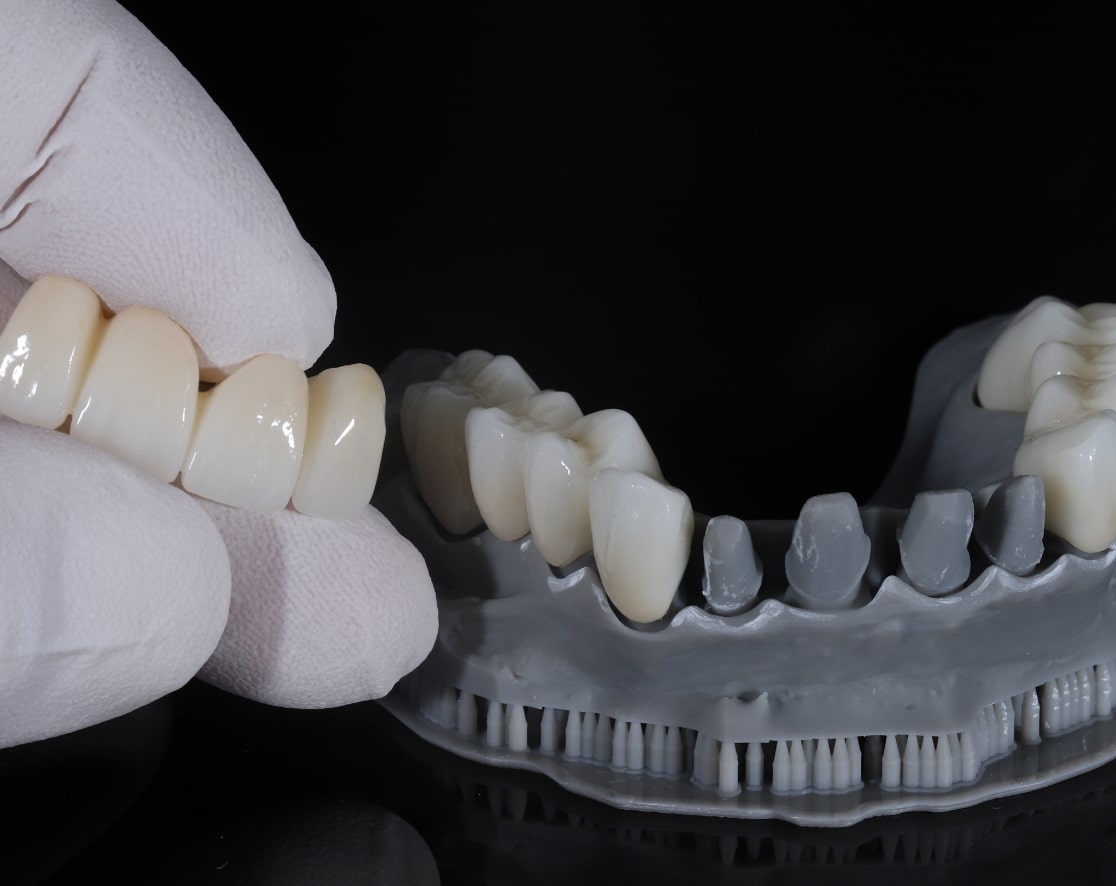
A dental bridge is a fixed prosthesis — a false tooth or teeth, most commonly made from porcelain — that fills the gap left by a missing tooth and is supported by the adjacent teeth or by dental implants. Unlike a denture, a bridge is permanently fixed in the mouth and does not need to be removed for cleaning. A well-made bridge is designed so that the false tooth appears to emerge naturally from the gum, making it difficult to distinguish from a real tooth.
At Conway House, the design and placement of dental bridges is guided by our Consultant and Specialist in Restorative Dentistry, Mr Ashok Vijayakumar (M.Pros RCS Eng, FDS RestDent RCS Eng), whose specialist training ensures that the bridge is planned not just for appearance, but for correct bite distribution, gum health, and long-term durability.
Book Your Consultation at Conway House
If you have one or more missing teeth and are considering your options in Marlow, Beaconsfield or High Wycombe, our team at Conway House Dental Practice is here to help. We will assess your teeth honestly, explain all the options clearly — bridge, implant, denture, or a combination — and recommend the approach that best suits your clinical situation, your lifestyle, and your budget.
Contact us today to book a consultation, or call us on 01494 526 578.
Conventional Bridge – Used when there are healthy teeth on both sides of the gap. The false tooth (pontic) is held in place by two crowns fitted over the adjacent teeth, which are prepared by removing a small amount of enamel to allow the crowns to sit correctly. A conventional bridge can span more than one missing tooth. It is a reliable, long-established solution that restores both function and appearance.
Cantilever Dental Bridge – Used nearer the front of the mouth where a false tooth needs support from only one adjacent tooth, rather than two. The supporting tooth can be prepared and covered with a crown, or — where the adjacent tooth is healthy and filling-free — a minimal-preparation approach using a thin piece of metal or ceramic bonded to the inner surface (a Maryland or resin-bonded bridge) can be used instead. This approach preserves the supporting tooth and is completely aesthetic, as the bonded wing is hidden from view.
Maryland (Resin-Bonded) Bridge – A Maryland bridge is a conservative option that avoids the need to prepare healthy teeth. A thin metal or ceramic wing is bonded to the back surface of the adjacent tooth, holding the false tooth in place. It is most commonly used for front teeth where biting forces are lower. The advantage is that no healthy tooth structure needs to be removed — making it a reversible option particularly well suited to younger patients or where a minimal-intervention approach is preferred.
Implant-Supported Bridge – Where more than one tooth is missing and no healthy adjacent teeth are available — or where avoiding the preparation of sound teeth is a priority — an implant-supported bridge provides a fixed solution anchored to dental implants placed in the jawbone rather than to natural teeth. At Conway House, implant-supported bridges are provided through a coordinated pathway between Mr Dipesh Patel, our Consultant Oral Surgeon who places the implants, and Mr Vijayakumar, who designs and fits the bridge restoration on top. This integrated approach ensures that the implant position and the bridge design are planned together from the outset.
Materials Used for Dental Bridges
The material chosen for your bridge depends on its location in the mouth, the forces it will be subjected to, and your aesthetic preferences.
Porcelain (ceramic) — the most natural-looking option, matched to the shade of your surrounding teeth. Modern ceramics including zirconia are highly strong and are now routinely used for bridges in biting areas as well as at the front.
Porcelain-fused-to-metal (PFM) — a ceramic outer layer bonded to a metal substructure. This combination offers good aesthetics with reliable strength and has been used successfully for many decades.
Metal alloys — gold and other precious or non-precious metal alloys are extremely durable and are sometimes preferred for bridges in non-visible areas where longevity under heavy biting forces is the primary concern.
Your dentist will discuss which material is most appropriate for your specific situation, taking into account the position of the missing tooth, the condition of the supporting teeth, and your long-term goals.
What to Expect When Getting a Bridge
A bridge is typically made over two appointments, usually two weeks apart.
At the first appointment, the supporting tooth or teeth are prepared — a small amount of tooth structure is removed to accommodate the crown that will anchor the bridge. A detailed impression or digital scan of your teeth is taken, and a colour match is recorded so the bridge can be made to blend naturally with your surrounding teeth. A temporary bridge is fitted to protect the prepared teeth while the final restoration is being made by our dental laboratory.
At the second appointment, the temporary bridge is removed and the final bridge is fitted. You will have the opportunity to assess the appearance and bite before we cement it permanently. Once you are happy, the bridge is fixed in place — and you leave with a complete, natural-looking smile.
Before Your Bridge: Getting the Foundation Right
A dental bridge relies entirely on the health and structural integrity of the teeth or implants supporting it. Placing a bridge onto teeth or gums that are compromised will shorten its lifespan and risk failure. At Conway House, we always address underlying issues before bridge treatment begins.
Gum disease — active periodontal disease causes bone loss around the supporting teeth and beneath the pontic area, which directly threatens the stability of a bridge. Where gum disease is present, Dr Mital Patel, our Specialist in Periodontics, stabilises the condition before bridge placement — and monitors gum health around the bridge in the long term.
Root canal treatment — supporting teeth that have infected or compromised pulps may require root canal treatment before they can safely have a crown placed on top. Where this is needed, our clinician with a practice limited to endodontics manages this in-house, so the sequence from endodontic treatment to bridge placement is coordinated without disruption.
Tooth extraction — where a failing tooth needs to be removed before the space can be bridged, Mr Dipesh Patel, our Consultant Oral Surgeon, manages this in-house. Coordination between the extraction and the bridge planning ensures optimal tissue healing and the best possible outcome for the final restoration.
If we identify any concerns during your assessment, we will always explain your options clearly and will not begin bridge preparation until the conditions are right for long-term success.
Specialist Support Available at Conway House
For straightforward bridges, your general dentist at Conway House will manage the full process. For more complex cases, our in-house specialist team is available without the need for referral elsewhere.
Restorative Dentistry (Mr Ashok Vijayakumar) — specialist involvement is particularly valuable for multi-unit bridges, implant-supported bridges, cases where the supporting teeth have been heavily restored, and situations where the bridge must integrate with a wider restorative or cosmetic plan. Mr Vijayakumar brings both the technical precision and the aesthetic judgement to deliver a result that looks, feels, and functions correctly for the long term.
Periodontics (Dr Mital Patel) — gum health around a bridge is critical. The pontic (false tooth) sits just above the gum, and if the gum recedes or periodontal disease develops around the supporting teeth, the appearance and stability of the bridge can both be affected. Dr Patel’s involvement ensures the periodontal environment is healthy before the bridge is placed and remains so throughout its life.
Oral Surgery (Mr Dipesh Patel) — for patients requiring implant-supported bridges, Mr Patel places the implants with the final bridge design already planned. For patients needing extractions before bridgework, he manages this in-house. This continuity of care between surgical and restorative stages avoids the gaps and delays that arise when multiple providers are involved.
FAQ
Frequently asked questions
Dental bridge or dental implant — which is better?
Both are effective solutions, but they suit different situations. A bridge can be completed in two to three visits and does not require surgery, making it a faster and less invasive option. An implant-supported crown is freestanding — it does not require preparation of adjacent teeth — preserves bone in the jaw, and can last a lifetime with proper care. A bridge may require replacement after ten to fifteen years. Your dentist will explain both options clearly and help you make a decision based on your clinical situation, your priorities, and your budget.
How many visits does it take to make a bridge?
Most bridges are completed in two appointments approximately two weeks apart. The first visit involves preparing the supporting teeth, taking impressions or a digital scan, and fitting a temporary bridge. The second visit involves removing the temporary bridge and fitting the permanent one. Some more complex cases — particularly implant-supported bridges — require additional planning and healing time, which will be explained at your consultation.
What are the advantages of a dental bridge?
A bridge restores the appearance of your smile and the full function of your bite, including comfortable chewing and clear speech. It is fixed in place — no removal, no adhesive — and once fitted, it feels very similar to natural teeth. It prevents the adjacent teeth from drifting into the gap, maintains facial symmetry, and is completed within a relatively short timeframe without surgery. At Conway House, a bridge can be matched precisely to the shade and shape of your surrounding teeth for a completely natural result.
How long does a bridge last?
A well-made bridge that is properly looked after can last ten years or more. The most common causes of early failure are decay developing at the junction between the crown and the tooth beneath it, gum disease around the supporting teeth, and bite-related stress. Excellent oral hygiene — including cleaning underneath the pontic with floss threaders or interdental brushes — and regular professional check-ups are the most important factors in maximising the lifespan of your bridge.
How much does a dental bridge cost?
The cost of a bridge depends on its design, the number of units involved, and the material used. At Conway House, the investment starts from £350 per tooth unit. A clear, itemised quotation is provided at your consultation before any treatment is agreed. Flexible payment options are available, including 0% finance subject to status.
Social Media
Follow us
Follow us on Instagram for smile transformations, dental tips, and behind-the-scenes moments!
I come to each appointment without any anxiety over what will happen or what will be said. Reception staff are helpful, hygienists and dentists are friendly and make the appointments calming. In particular, Chanvir, Umer and Zaynab were great today. This practice is far more professional and accommodating than the other practices I’ve been to in Bucks. Would recommend 👍🏼
Have been going to Conway House for years. Harry and his team are all such professionals. All the latest technology available. Always a warm welcome and appointments easy to obtain. The very best in dental care. I have referred a number of friends there over the years and they too are very impressed with getting excellent quality of care and service.
I have been working with Conway Dental to fix a root canal from years ago (done by someone else) that went wrong. I have had a wonderful experience with everyone at this practice - Chanvir, Sukhpreet, Anand and Sugs. From the start I’ve been made to feel comfortable; they are very good at follow-up to ensure the treatment is going well. I was lucky enough to be referred by a friend, and I would recommend Conway Dental Practice without hesitation to anyone looking for dental care.
I used Conway House Dental Practice for cosmetic work on my teeth as I read good reviews on their website. The clinic is clean, desk staff is warm and welcoming.On my first visit Dr. Nikil Dhokia and Leah made me feel very comfortable and explained every step clearly. They are both very friendly and gentle which made me feel at ease as I have dental anxiety.I was particularly impressed how skilled Dr. Dhokia is and I am very pleased with the final result. I would definitely reccomend Conway House Dental Practice.Sana
Really great service here! I came to the practice because of the great reviews and now I'm leaving one. I've never been a fan of the dentists but honestly I don't mind them anymore. All the staff here are very lovely and professional. I've had several treatments here now and the dentists have been amazing and attentive to my needs. Special thanks to Dipesh Patel, Harry and Naomi are especially very lovely!
I had woken up early hours with a sudden pain from what appeared to be an infection. After contacting 3 different out of hour practices, Harry from Conway House was the only one who got back to me and got me booked in as priority in the morning. This was my first time at this practice and the receptionist team were lovely and welcoming. I then met with Nick and Zaynab for my treatment, both were lovely and made me feel at ease and signposted me to the next steps. They made me feel so comfortable and relaxed and remained factual and informative throughout. As a result of the service I received I am fully considering transferring over and having all my treatment through Conway House moving forward, you can see the genuine care the team have for patients and offer the best advice and treatment plans. I look forward to my next visit!
I’ve been a patient at Conway House Dental for years, and I genuinely can’t recommend them enough.My regular dentist, Harry, is incredibly thorough. Every check-up never feels rushed, and he always takes the time to explain everything clearly, give honest advice, and make sure any concerns are properly addressed. What really stands out is how much he genuinely cares about his patients. If there’s ever been an issue, he’s even personally followed up to make sure everything was sorted, which says a lot about the level of care you receive here.A year ago, I had composite bonding done by Rianna, and it was honestly one of the best decisions I’ve made. I didn’t have bad teeth to begin with, I just had a gap that had always bothered me. Rianna didn’t just improve my smile. She gave me so much more confidence.What I love most is how natural the result looks. People don’t realise I’ve had composite bonding unless I tell them. My teeth still look like my teeth, just better. They’re naturally shaped, naturally white, and nothing like the overly bright, obviously fake look that people often worry about. A year on, I still get compliments on my smile, and I couldn’t be happier with the result.Whenever I’ve had a question or a small concern about my bonding, I’ve simply emailed the practice and they’ve always replied promptly and done their best to fit me in as soon as they could. I know they’re a busy practice, but I’ve never once felt like my concerns weren’t important, and I really appreciate that level of care and reassurance.It’s not just Harry and Rianna who make this practice so special. The dental nurses, hygienists and reception team are always welcoming, friendly and professional. From booking appointments to walking through the door, everyone makes you feel genuinely looked after.If you’re thinking about composite bonding but don’t know where to start, or you’re worried about ending up with an unnatural-looking smile, I honestly wouldn’t hesitate to recommend Conway House Dental. The quality of care, attention to detail and genuine kindness from everyone at the practice are second to none.
I honestly can't recommend this practice highly enough.Dr Rianna is absolutely fantastic—she's kind, professional, and takes the time to explain everything, which immediately put me at ease. Her chatty and gentle approach made what could have been a stressful appointment feel completely comfortable.A special thank you to Nabila, Dr Rianna's right hand, who was so warm, caring, and attentive throughout. They make such a brilliant team and really go above and beyond to make you feel looked after.The practice is spotless, well organised, and you can tell they genuinely care about their patients. I'm so pleased I found them and wouldn't hesitate to recommend Dr Rianna and Nabila to anyone looking for exceptional dental care. My husband is going there next.
My first visit to Conway Dental, and met with Harry and his team who were absolutely amazing. As always I was nervous pre treatment, previously told by a different dentist that I need my tooth extracted! However Harry saved the day and my tooth with a crown filling and pain free. I can’t thank Harry, Naomi and his team enough 🙏🏼
I had a dental emergency with swelling and infection and was very worried.I would like to say a big thank you to Jody and Maria for their kindness, professionalism, and support.They really took my situation seriously and made sure I wasn’t left in pain. I felt cared for and reassured throughout the whole process.I truly appreciate everything they did for me. Highly recommended!
All the team at Conway House Dental practice are so wonderful, really caring and professional. Excellent treatment from my dentist Hardeep Basra, he explained the procedure every step of the way. I love that the team personally call to remind you about upcoming appointments and always call the day after to check in with you. I would 100% recommend them for your dental work
Excellent surgery ! I recently had to go to Conway dentist for emergency weekend treatment , Right from the start the service was brilliant. Natalie at reception handled the appointment and those that followed so calmly friendly and efficiently. She could not have done more for me. Then Arjan carried out emergency treatment, he was so calm and kind and reassuring very helpful along with his assistant who was excellent as well and sorted the problem He also issued antibiotics on the spot so I didnt have to search for a chemist open.They called me the next day to see if I was ok, that was on a Sunday ! And the following days as well . I returned and followed up with Arjun and a nurse called Shannon again excellent treatment. I then saw Harry for further consultation he was excellent as well very reassuring to his patients and loves his work and is so experienced!The surgery is amazing with offering so many treatments and specialties. Very impressive all round a great experience for a dentist. They have got it right all round .
We have been going to Conway House for about 8 years now and every time we have an exceptional experience. The team are so kind and accommodating, always checking in in advance of appointments and following up as well. Service is second to none! My husband required a lot of emergency treatment a few years ago and the team were outstanding in accommodating him at short notice and maintaining a thorough schedule with him, that worked with our finance plans, to make sure he has the best set up and outcome. I have had orthodontic treatment with the amazing Helen Veeroo - best money I have ever spent!! Am so pleased with the outcome. The dental nurses are fabulous, shout out to Carolina who is always so sweet. Thank you Conway House for always making our trips to the dentist a fun one!
Best dental practice in the area without a doubt!! I’ve had fillings, a wisdom tooth removal and teeth whitening done here, and every experience has been excellent and completely pain-free. I went yesterday for my routine hygiene and polishing appointment and couldn’t be happier with the results, my teeth look brand new! Sadia and Naomi did a fantastic job, as always, and I’ve walked away with a fresh, bright smile. Highly recommended!!
I recently visited Conway House and I must say I am very impressed with how welcoming they are. I was offered refreshments and heating was turned up. Dr Harry and his assistant Alina were professional and caring knowledgeable, and took the time to clearly explain everything before starting the procedure, which made me feel completely at ease. Their attention to detail and gentle approach really stood out to me. I highly recommend this high quality dental practice.
Always an excellent experience at Conway House. The team is incredibly professional, while also being warm and friendly. The practice itself is beautifully presented, spotless, and welcoming. They have an excellent team of dentists across specialisms, so no need to go elsewhere consistently responsive and accommodating - fixed retainer broke and was causing pain, they made room for me on the same day! Our whole family is with this practice (have been for years), and we always feel well cared for and would highly recommend them. And as for Harry - simply wonderful!
We visited Conway House due to my brother-in-law’s severe toothache, and he was very nervous. Dr Harry Basra and Naomi were incredibly understanding, patient, and reassuring. They put him at ease and resolved his pain efficiently. We were made to feel comfortable and welcomed throughout. Outstanding care and service — we’re very grateful.
I had such an amazing experience at this dental practice. I was honestly really scared to go in, but Harry and his assistant Imaan made me feel completely comfortable and relaxed from the moment I arrived.They were both so calm, patient, and reassuring, and explained everything clearly. The treatment was gentle and completely painless – I genuinely didn’t feel a thing.If you’re nervous about the dentist like me, I can’t recommend them enough. Truly the best dentist in town. Thank you both for making it such a positive experience!
I had an absolutely wonderful experience at Conway House Dental Practice. From the moment I arrived, every single member of the staff was incredibly kind, friendly, and professional. They made me feel completely at ease, answered all my questions, and supported me throughout my treatment.My tooth extraction with Dr Arjun Singh Bahia went smoothly, and I felt completely safe and cared for at every step. The whole team worked together so efficiently and with such warmth it really made the experience much less stressful than I expected.I highly recommend Conway House Dental Practice to anyone looking for not only excellent dental care but also a genuinely caring and welcoming team. You truly feel that everyone there cares about your comfort and wellbeing!
I had an excellent experience at this dental practice and couldn’t recommend it highly enough. From the moment I arrived, the reception team were welcoming, friendly, and extremely helpful. The appointment ran on time, which I really appreciated.The dentist was professional, knowledgeable, and took the time to explain everything clearly, putting me completely at ease. They were gentle, thorough, and genuinely cared about my comfort throughout the treatment. The dental nurse was equally kind and reassuring, making the whole experience stress-free.The practice itself is clean, modern, and well organised, which immediately gives confidence in the quality of care provided. Overall, the level of service and attention to detail was outstanding. I wouldn’t hesitate to return and would happily recommend this practice to family and friends.
Thank you to the amazing staff at Conway House for again making me feel at ease and reassured as a nervous patient, when having emergency dental treatment. Harry and the team always go above and beyond; the dentist even stayed after hours to ensure I would be out of pain over the Christmas holiday period. Would recommend without hesitation. Thank you!
the hygienist here are amazing and so professional, my appointment was great! Nadia thank you for how patient and compassionate you are.All the staff there are great, they are so welcoming and make you so comfortable, i am very happy with my treatment today and i really recommend them.
I visited The Conway Practice recently after a few years of absence, on my latest appointment I had temporary crown fitted and old filling replaced . From the moment I entered the practice I was welcomed by friendly and professional team. Dr Chanvir who I had appointment with was very professional, friendly and made me feel very comfortable and I felt he really cared. He explained everything in details what needed to be done and I was asked throughout the treatment if I was ok and comfortable. The whole treatment was really amazing . Unfortunately, after few days I had to come back to the practice ,as I had a little discomfort on my new filling. I explained at the reception desk about my problem and without hesitation I was booked to see Dr Hardeep(Harry) who came after a few minutes to welcome me , I was even offered a cup of coffee while I was waiting , wow. Even more impressive I was when Dr Harry within a minute discovered what was the problem with new filling and with a little of grinding/polishing work he fixed it . The treatment took just about 10 minutes , all good now. Excellent dentist practice , professional dentists .Also, nice and friendly staff . Highly recommended, well done Conway House .
I can’t thank Harry and his team enough for seeing me at such short notice when I had a dental emergency. From the moment I arrived, they were incredibly kind, attentive, and reassuring. Despite the last‑minute nature of my visit, they went out of their way to make me feel comfortable and well cared for.I deeply appreciate their help and would wholeheartedly recommend this practice to anyone looking for excellent dental care.
As a very nervous patient, I cannot recommend Conway House enough. They take the time to thoroughly explain everything they are doing and why, making you feel at ease throughout. A brilliant dentist with patient care as their top priority!
What a fantastic practice! From the moment you step inside you feel welcomed and relaxed. All of the staff are lovely, friendly and professional. Without a doubt the best dental treatment I have had in a long time. Thank you!! 🤩
Absolutely amazing Dental practice. I could not recommend Conway enough. From having an extraction hassle free and pain free to treatment on my 5 year old son with no issues and settle him amazingly well. Always prompt and professional on all check ups and hygiene treatment also. Great staff very polite and professional.
First class service by Harry and his team. Managed to get an appointment within 2 hours of calling, and Harry was very gentle in repairing my 9 yr old son’s tooth. Extremely professional and friendly practice.
I had a really great experience in Conway House dental. Dr. Harry and the rest of the staff were welcoming, professional, and made me feel completely at ease throughout my appointment. The dentist explained everything clearly and took great care during the treatment.
My whole experience from start to finish with Conway House was amazing and I cannot fault them on anything. I have to give a shout out to Chanvir, he put me at ease from the moment I sat in the chair and throughout my whole treatment plan. I cannot thank him enough for getting me through it all. See you in 6 months!Maria.. The 5 stars are for you too. You're doing a good job and I was so glad to see you at both my hygienist and dentist appointments ✨
I had a fantastic appointment with Harry today. From the moment I arrived, he was warm, welcoming, and made the whole experience feel very personalised. He has such a positive, upbeat attitude that actually made the appointment fun—something I never thought I’d say about a dentist visit! He immediately put me at ease and explained everything clearly, which really helped me feel comfortable. I would highly recommend Harry to anyone looking for a dentist who is not only professional, but genuinely cares about making patients feel relaxed and looked after.
Amazing service at Conway House Dental practice! Harry and Nina are very caring dentists and do look after their patients extremely well. I have been seeing by them for the last 15 to 20 years and I would not go anywhere else!They are even available to talk to you over the phone at anytime.
Conway House Dental Practice is absolutely amazing! The principal dentist, Harry, creates such a positive and welcoming atmosphere that instantly puts you at ease. All the staff are friendly, professional, and always ready to help.Sugs is incredible — he treated me with such care and patience. As someone who is usually a very nervous patient, I was so impressed by how comfortable he made me feel throughout the entire process. Naomi, the nurse, was also wonderful and really helped calm my nerves.I’m so happy with the treatment I received and have already recommended Conway House to all my family and friends. Highly recommended!☺️👌🏼
I had an emergency appointment at Conway House and was really impressed with the service. Maria, the assistant, even stayed back longer to help Harry, so that I could have my treatment. Everything was handled very efficiently and quickly – I was in and out without any stress. It’s a shame they’re based in High Wycombe, as I’d happily become a permanent patient if they were closer. Highly recommend!
We attended Conway House with our 1-year-old for an emergency appointment and I couldn’t be more grateful for the amazing care we received. Cheryl on front of house was so welcoming and reassuring from the moment we arrived, which instantly put us at ease. Dr Basra and Nurse Alina were both superb in surgery – professional, kind and absolutely wonderful with our little man. Thank you all so much for making a stressful situation so much easier. Highly recommend!
Harry (the owner) was incredible throughout my treatment.From the very first call with Harry, I was pleasantly surprised that he was available on a weekend and took the time to answer all my questions. This immediately gave me the confidence to book a consultation. From the start, he welcomed me warmly and put me at ease despite my nerves.Initially, Harry reassured me that he could fix the problem I first came in with.For anything else I needed, he was two steps ahead—asking me what I actually wanted, coming up with solutions, and giving me the different options to choose from which was a great refresher.Harry is genuinely focused on providing treatments that deliver results. He’s not about upselling or pushing unnecessary procedures. Instead, he offers options that are tailored to what’s truly needed. His good intentions and honesty made a big difference to me throughout my care, which really showed me that he had my best interests at heart.What stood out most was Harry’s leadership, is that he reassured me that anyone he referred me to, would be just as good as him.He even came into my first hygiene appointment to explain my case directly to the hygienist. Here is where I felt reassured, knowing Harry is truly in the trenches with his team.He recommended Arjun, who quite literally saved my tooth. From the beginning, Arjun took the time to ask me questions to understand me as and my values, ensuring his approach aligned with my goals. He genuinely wanted to help me achieve the best possible results and took the time needed where I felt supported.Harry stayed involved every step of the way alongside Arjun, ensuring my treatment was seamless. Having both of them supporting me, gave me real confidence throughout, and it’s why the results were so positive. Arjun was professional, attentive, and calm—he kept me informed at every stage, explaining the aftercare, and reassured me about what to expect while the nerve settled. This education helped so much.No problem is too small for Harry—ANYTHING you ask him to do, he will do it! That’s the key approach that has helped me immensely throughout this process.I will no doubt be having further treatments with Harry and already can see that he is more confident in treating them, which is a great reassurance. I am looking forward to this and perfecting my smile.Hygienist:Umar was outstanding from start to finish. He made sure I was comfortable and listened carefully, allowing me to ask questions if I needed anything, which was great as I needed the numbing gel. He clearly explained why gums bleed and showed me exactly how to clean properly. What impressed me most was that both Umar and Harry introduced me to a specific angled brush for my gum line—a total game changer. His thorough clean meant that within just two weeks, my gums improved noticeably and my teeth have never felt so clean. Harry even came into my first hygiene appointment to explain my case directly to Umar, which reassured me knowing Harry is in the trenches with his team.Dental Nurses and Receptionists:The dental nurses always had a smile on their faces and were incredibly attentive. You could tell they genuinely enjoy the work they do, which made the whole experience much more pleasant. The receptionists, Cheryl and the team, were equally attentive and proactive; whenever I needed to make a change, they didn’t hesitate—they sorted it straight away, even when I told them not to bother yet! It’s clear that Harry has created an environment where everyone wants to be there, not just has to be. That positive vibe really shows in the care they provide.
I’ve had nothing but excellent experiences from Conway House Dental clinic. Visiting this Dental clinic past 5 years with my son who is now 10. Staff is warm, welcoming, and professional. The office is clean, modern, and well-organized, which immediately put me at ease.Dr Harry Basra is not only highly skilled but also incredibly compassionate and patient.What I appreciate most is the genuine care and attention they give to each patient. It’s clear that this practice values not just excellent dental work, but also creating a positive experience for everyone who walks through the door. Highly recommend 👌
I’ve always been a very nervous dental patient and had avoided going to the dentist for years. Last year, I needed an emergency appointment and Conway saw me within 2 hours and fixed my tooth pain. The service was excellent, and all the staff were incredibly friendly and reassuring. Since that first visit, I’ve had several procedures at Conway and my whole family have moved over to them. I can’t recommend them highly enough.
I had an amazing experience at this dental practice. From the moment I walked in, the team made me feel comfortable and at ease. Harry was incredibly professional and kind—he handled my emergency with such care and efficiency. I truly felt looked after, and the whole process was smooth and reassuring. I’m so grateful for the service I received and would highly recommend this practice to anyone in need of expert dental care.
I had been putting off a deep clean for years due to fear and discomfort, but Tia at Conway completely changed my experience. I was dealing with a lot of bleeding and knew I needed to be seen. Tia was incredibly thorough, gentle, and made the whole process easy and pain-free. I can’t recommend her enough. She’s fantastic!
My wife and I have been using Conway for years and can’t recommend highly enough the dentists and hygienists. They are exceptional at looking after your teeth, share oral hygiene advice and maintain a professional attitude. The reception staff is also helpful and polite, apart from a strange interaction yesterday where a receptionist told me off about the way I pronounce my name :D Unnecessary comment but I laughed nevertheless :D
Genuinely brilliant dentist - great care, welcoming staff, always have time for their patients and have amazing out of hours and emergency care if you ever do need it. They also have great follow up care as well after any work is done. I also had Invisalign done here and was very happy with the results.
Absolutely hands down the best dental practice you could wish for. I am a nervous patient and bring all my family here without hesitation. Harry Basra is an incredible dentist and total legend with my children. Highly recommended! All staff are wonderful ☺️
Conway is a world-class dental practice — Harry and his team are truly outstanding. I’ve always had a fear of the dentist, but just two visits here completely changed that. Their care is personal, genuine, and comforting. They make you feel more like family than a patient. I can’t recommend them highly enough — absolutely exceptional!
I recently completed my Invisalign treatment at Conway House Dental Practice and couldn’t be happier with the results! From start to finish the entire process was amazing, professional and smooth. The team made me feel so comfortable every step of the way. I’m so pleased with the outcome that I’ll now be continuing with them as my regular Dentist. Highly recommend, thank you Nik and Harry.
It was a specialist treatment that my dentist was unable to deal with that brought me to Conway House and I have been a loyal client ever since. The entire team are highly skilled, professional, yet friendly and approachable. Highly recommended for any kind of dental treatment you need!
I had a hygienist appointment with Tia yesterday and she was fantastic. She was calm, friendly, and incredibly gentle with my teeth, making the whole experience very comfortable. Tia was also extremely thorough and took the time to explain everything clearly. Highly recommend!
The team at Conway Dental Practice are so lovely! I first came here back in September for some emergency dental treatment with Hayley who was fabulous and put me at ease. Harry is also amazing and very efficient, getting me in to see Carolina immediately after my appointment despite not having an appointment with her.
I've had a great experience at Conway Dental Practice! The staff are friendly, professional, and make you feel at ease from the moment you walk in. My appointments have always been on time, and the care I received was thorough and gentle. Highly recommend to anyone looking for a reliable and welcoming dental practice!
I highly recommend! I am delighted with the approach full of kindness and understanding and patience with patients. The most important thing in all of this is the full professionalism of the procedures performed. This is a high-level office and service. Thank you for gradually getting my teeth in order. Best regards to the entire team. Thank you
I have been with Conway House Dental Practice since 2010, and I cannot recommend them highly enough. As someone who has struggled with dentophobia, I used to move from one dental surgery to another due to complications after each treatment—until I met Dr. Harry.Dr. Harry has provided effective solutions for all my dental issues. He never hesitates to attend to me, in any emergency situations, and his level of care has remained consistently excellent from day one. I've never felt as safe or well cared for anywhere else.I wholeheartedly recommend Conway House Dental Practice for their outstanding service and exceptionally high standards.Trisha K Visvanathan
I had a fantastic experience visiting Dr. Harry and the hygienist at the Conway House. The staff are welcoming and professional. Dr. Harry was thorough, explaining everything clearly and ensuring I was comfortable throughout the procedure. The hygienist did an excellent job with my cleaning, gentle yet effective. Highly recommend this team for anyone looking for top-notch dental care.