Contact Us

The gold standard in replacing multiple missing teeth — custom-made, fixed, and indistinguishable from natural teeth.

Implant retained bridges

When several teeth are missing across one or both arches, the impact goes far beyond appearance. Gaps alter the way you bite and chew, put neighbouring teeth under strain, and accelerate bone loss in the jaw over time. A conventional bridge held in place by crowning healthy adjacent teeth can address the gap — but it does so at a cost to the teeth supporting it.

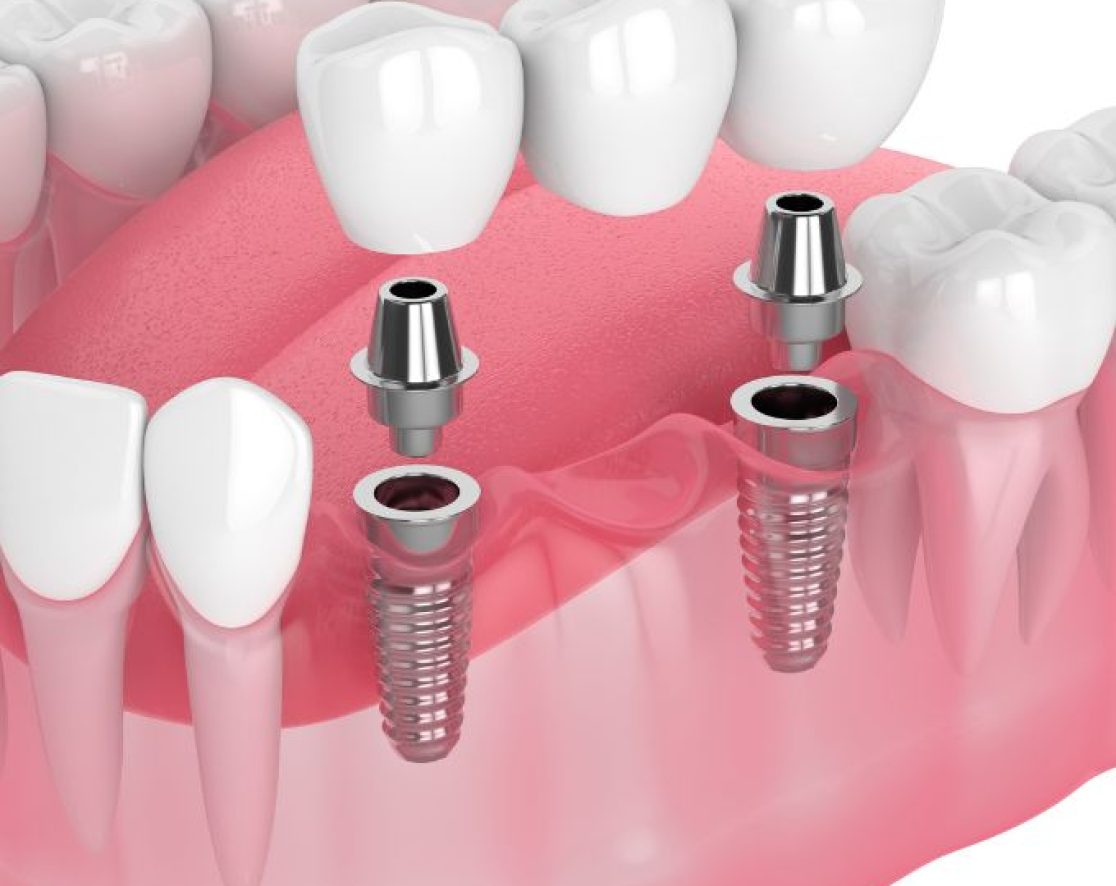
A fixed implant-supported porcelain bridge takes a fundamentally different approach. Rather than relying on natural teeth for support, the bridge is anchored directly to dental implants placed in the jawbone. The result is a restoration that is completely independent of surrounding teeth, firmly fixed in the mouth, and designed to look, feel, and function as close to natural dentition as modern dentistry can achieve.

At Conway House Dental Practice, implant-supported bridges are planned and delivered by our GDC-registered Specialist Dentists — not general practitioners who have completed a weekend implant course, but clinicians with dedicated postgraduate training in Oral Surgery and Restorative Dentistry. For patients across Marlow, Beaconsfield and High Wycombe, that distinction matters.

What Is a Fixed Implant-Supported Porcelain Bridge?

An implant-supported porcelain bridge is a multi-tooth prosthesis that is permanently anchored to two or more dental implants. Unlike a conventional bridge, which is cemented onto crowned natural teeth on either side of a gap, an implant bridge is self-supporting — each implant acts as an artificial tooth root, bearing the load of the bridge without involving neighbouring teeth at all.

The bridge itself is fabricated in high-quality porcelain, custom-matched to the shade and shape of your surrounding teeth. It is screwed or cemented securely onto the implants and is not removable by the patient — it functions, and is cared for, in much the same way as natural teeth.

For patients requiring a full-arch replacement, six to eight implants are typically used across the upper and lower jaws to support a complete porcelain bridge. This approach represents the gold standard in full-arch restoration — delivering the most natural-looking and natural-feeling result available in contemporary implant dentistry.

If you have been told that only removable dentures or conventional bridges are possible for you, we would encourage you to request a specialist assessment. In many cases, implant-supported options are more achievable than patients expect.

Book Your Consultation

If you are missing multiple teeth and are considering a fixed, permanent solution in Marlow, Beaconsfield or High Wycombe, we would welcome the opportunity to assess your suitability and explain your options clearly.

Book a specialist consultation for £150 and take the first step towards a complete, confident, and natural-looking smile.

Back to Dental Implants Online Booking
down blue white circle arrow down white blue circle arrow

Specialist restorative care

This is a premier specialist treatment requiring advanced surgical and restoration skills.

Learn about our specialists

Refer this case

Dentists managing complex cases can refer patients to specialists for treatment.

Contact

Get in touch

Who Is This Treatment Suitable For?

Fixed implant-supported porcelain bridges are well suited to patients who:

  • Are missing multiple adjacent teeth in one section of the mouth and want a fixed, permanent replacement that does not depend on grinding down healthy neighbouring teeth.
  • Have failing or failing dentition across a full arch and want the most natural-feeling, highest-quality fixed replacement available.
  • Currently wear a conventional bridge but have experienced failure, decay under the supporting crowns, or poor aesthetics, and want a longer-term solution.
  • Have previously been told they cannot have implants due to bone loss — bone grafting, performed in-house by our Consultant Oral Surgeon, can often create the right conditions for implant placement.
  • Want to avoid removable dentures entirely and are looking for a fixed restoration that requires no adhesives and no nightly removal.

A thorough clinical assessment, including 3D CBCT imaging, is essential before treatment is recommended. This allows us to evaluate bone volume, bone density, gum health, and the position of key anatomical structures before any decisions are made.

The Benefits of Implant-Supported Porcelain Bridges

  • No damage to healthy teeth — unlike a conventional bridge, no adjacent teeth are crowned or ground down to provide support.
  • Fixed and permanent — the bridge does not move, click, or require adhesive. It is secured to the implants and stays in place at all times.
  • Natural appearance — high-quality porcelain is matched to the shade and contour of your existing teeth, or designed to create the aesthetic result you are looking for.
  • Bone preservation — the implants stimulate the underlying jawbone, preventing the bone loss and facial changes that follow tooth loss.
  • Long-lasting — with proper maintenance and regular professional hygiene, implant-supported bridges can last for many years and in many cases a lifetime.
  • Easy to maintain — cleaned much like natural teeth, with brushing, interdental cleaning, and regular hygiene appointments.
  • Superior aesthetics for full-arch cases — for patients replacing an entire arch, a full porcelain bridge supported by six to eight implants delivers results that are widely regarded as the most life-like available.

Your Treatment Journey

Consultation — £150

Your journey begins with a specialist consultation. We take detailed photographs, X-rays, and in most cases 3D CBCT images of your jaw. We assess your bone quality and quantity, your gum health, and your general medical history. You will leave with a clear, itemised treatment plan — including all costs — before any treatment begins. There are no surprises.

Preparatory Treatment

Where preparatory work is needed — such as gum disease treatment, extractions, or bone grafting — this is managed in-house by the relevant specialist. Our Specialist in Periodontics, Dr Mital Patel, oversees gum health where required; complex surgical preparation is led by our Consultant Oral Surgeon, Mr Dipesh Patel. We will never place implants until the clinical conditions are right for long-term success.

Implant Placement

The implants are placed under local anaesthetic in a carefully planned surgical procedure. IV sedation is available for patients who prefer a more relaxed experience. The number of implants placed depends on the span and design of the bridge. A temporary restoration is usually provided during the healing period, so you are never left without functional teeth.

Osseointegration and Review

Over the following three to six months, the implants fuse with the surrounding bone through a natural process called osseointegration. We monitor healing at regular review appointments. Once integration is confirmed, impressions or digital scans are taken to design the final bridge.

Final Bridge Placement

Your definitive porcelain bridge is fabricated by a specialist dental technician and fitted by our Specialist in Restorative Dentistry, Mr Ashok Vijayakumar. This stage of treatment is where function and aesthetics come together. The bridge is checked carefully for fit, bite, and appearance before it is permanently secured — from £3,500 for implant bridges.

Long-Term Maintenance

Implant-supported bridges require professional maintenance to remain healthy. Our hygiene team will guide you on effective cleaning around and beneath the bridge. We will monitor both the implants and the bridge at your regular check-up appointments. Peri-implantitis — infection around the implant — is preventable with proper care, and our team ensures you have all the tools and knowledge to protect your investment.

The Specialist Dentistry Behind Every Bridge

A fixed implant-supported porcelain bridge is not a single-discipline treatment. It draws on the coordinated expertise of multiple specialist clinicians — and at Conway House, all of that expertise sits under one roof.

Restorative Dentistry — Precision Design from Implant to Crown

The final bridge must do more than fill a gap. It must restore the correct bite, withstand the forces of chewing over many years, and look completely natural. Mr Ashok Vijayakumar, our Consultant and Specialist in Restorative Dentistry (M.Pros RCS Eng, FDS RestDent RCS Eng), leads the restorative element of every implant bridge case. His involvement ensures that the prosthetic design is as carefully considered as the surgical procedure — a standard that goes well beyond what a generalist can offer.

Oral Surgery — Placing Implants and Managing Complexity

Every implant is placed by Mr Dipesh Patel, our Consultant Oral Surgeon (BDS Lond, MFDS RCS Ed, MOral Surg). Where bone grafting, sinus lifts, or complex extractions are needed before implant placement, these procedures are also performed in-house. Keeping surgical complexity within the practice means continuity of care, faster coordination, and a single team who knows your full clinical history.

Periodontics — Protecting the Gum Foundation

Healthy gums are a prerequisite for successful implant treatment, and an ongoing requirement for long-term implant health. Dr Mital Patel, our Specialist in Periodontics (MClinDent Perio, MPerio RCS Ed), manages any gum disease before implant placement and monitors periodontal health throughout your care. Peri-implantitis is the leading cause of implant failure, and specialist periodontal oversight is one of the most powerful safeguards against it.

Endodontics — When Adjacent Teeth Need Attention

During your assessment, we may identify that teeth adjacent to the implant bridge have underlying issues — for example, failing root canal treatment or deep infection. Our Specialist Consultant Dentist covers complex endodontic cases in-house, meaning that any preparatory treatment to adjacent teeth is carried out to the same specialist standard, without the need for a separate referral elsewhere.

Orthodontics — Optimising Spacing Before Placement

In some cases, particularly where patients are replacing teeth in one arch while retaining teeth in the other, orthodontic alignment may improve the spacing available for the bridge and the quality of the final result. We offer Invisalign and fixed braces for adults, and our team will advise clearly on whether orthodontic preparation is relevant to your case and, if so, what the optimal treatment sequence would be.

Sedation — For Patients Who Find Treatment Difficult

We recognise that implant procedures feel daunting for many patients, particularly those who have had difficult dental experiences in the past. IV sedation is available throughout the surgical stages of implant bridge treatment, administered by our sedation-trained clinicians. Patients who choose sedation often describe feeling calm and comfortable throughout, with little or no memory of the procedure.

FAQ

Frequently asked questions

How is an implant-supported bridge different from a conventional bridge? right washed out crimson circle arrow down washed out crimson circle arrow

A conventional bridge is supported by crowning the healthy teeth on either side of a gap. This requires those teeth to be permanently altered — ground down — even if they are otherwise intact and healthy. An implant-supported bridge is anchored to implants in the jawbone, leaving neighbouring teeth completely untouched. It also stimulates the bone beneath the gap, whereas a conventional bridge does not, which means bone loss continues under a conventional bridge over time.

How many implants will I need? right washed out crimson circle arrow down washed out crimson circle arrow

This depends on the number of missing teeth and the design of the bridge. A short-span bridge replacing two or three adjacent teeth may require only two implants. A full-arch porcelain bridge — replacing all teeth in the upper or lower jaw — typically requires six to eight implants for optimal support and stability. We will confirm the exact number at your consultation, based on your 3D imaging results.

How long does treatment take from start to finish? right washed out crimson circle arrow down washed out crimson circle arrow

A straightforward case — where no bone grafting or significant preparatory treatment is needed — typically takes between four and eight months from the initial consultation to final bridge placement. Cases requiring bone grafting or periodontal treatment will take longer. We provide a clear, realistic timeline at your consultation so you can plan accordingly.

How much does an implant-supported porcelain bridge cost? right washed out crimson circle arrow down washed out crimson circle arrow

Implant bridges start from £3,500, with an initial consultation fee of £150. The total cost depends on the number of implants required, whether preparatory treatment such as bone grafting or gum treatment is needed, and the complexity of the final restoration. We provide a full, itemised cost breakdown at your consultation with no hidden charges. Flexible payment options are available, including 0% finance subject to status.

Will the bridge look natural? right washed out crimson circle arrow down washed out crimson circle arrow

Yes. The porcelain used for the bridge is matched carefully to the shade, shape, and translucency of your surrounding teeth — or, in full-arch cases, designed from scratch to create a natural-looking, age-appropriate result. The involvement of our Specialist in Restorative Dentistry at the design stage ensures that the aesthetic outcome receives the same level of clinical attention as the surgical procedure.

What if I do not have enough bone? right washed out crimson circle arrow down washed out crimson circle arrow

Bone loss in the jaw is common following prolonged tooth loss and does not automatically rule out implant treatment. Our Consultant Oral Surgeon performs bone grafting procedures in-house, using bone from your own body or from a biocompatible graft material. Where a sinus lift is required for the upper jaw, this is also carried out in-house. We assess bone volume in detail using 3D imaging and advise you clearly on whether grafting is needed before any treatment begins.

Implant retained bridges
Google Rating
5.0
Google Rating
Google-review